Wable Maji Safi Solutions: Bringing Clean Water to Lake Victoria Communities
Although the Lake Victoria basin is the largest freshwater lake in Africa, safe drinking water remains hard to come by for many people living along its shores. Families still walk for long distances and often return home with water that puts their health at risk. Through support from The RISA Fund, Onyango Odak, founder of Wable Maji Safi Solutions is tackling this issue head on – making clean water simple, safe and accessible to everyone.
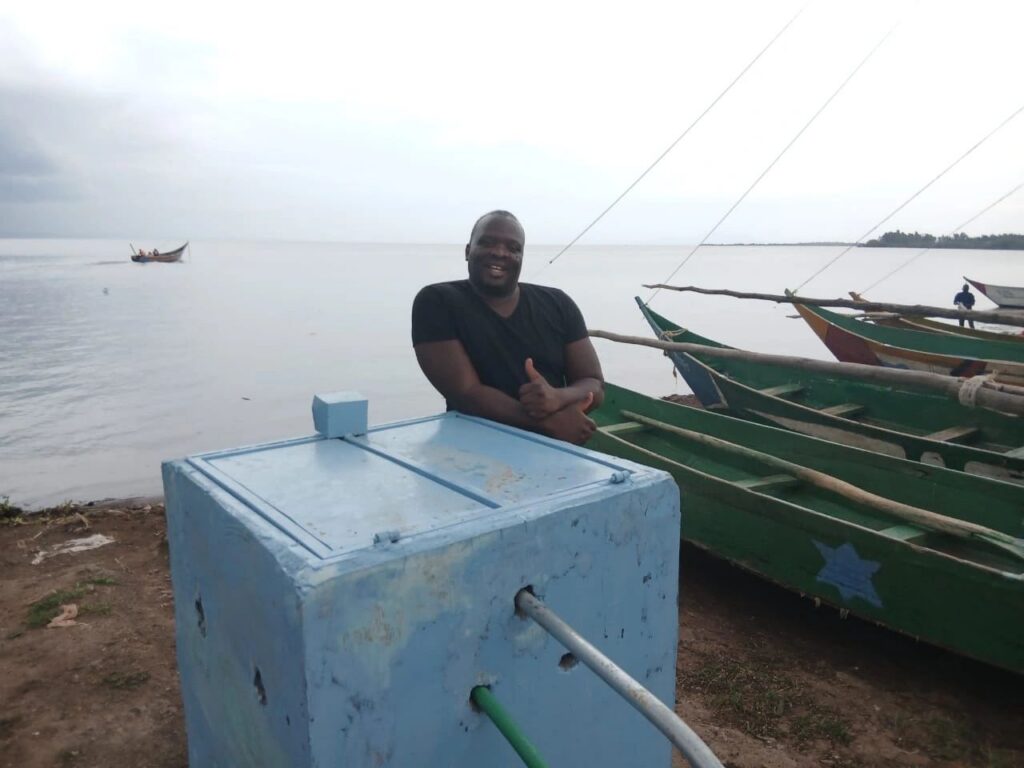
Onyango Odak, founder of Wable Maji Safi Solutions
Wable Maji Safi Solutions developed the M‑Safi Smart Water ATM, a pay‑as‑you‑go system designed to make it easier for rural communities to access clean drinking water. Unlike traditional water systems, M‑Safi eliminates tokens and manual administration. Instead, users can pay instantly using M‑Pesa mobile money, making the process quick, flexible, and convenient. This model helps water providers collect payments more reliably, while giving users full control over how and when they pay. Early adoption shows improved revenue collection and more consistent access to safe water. Beyond improving water access, M‑Safi supports the financial sustainability of rural water systems and strengthens community‑led service delivery.
This innovation didn’t emerge from a research lab or a university, it came from hands on experimentation. Onyango developed a series of prototype water solutions for households and small businesses, refining each version until he arrived at the water ATM model. While early versions were technically sound, they needed community alignment and scalability for long term impact. When the Viktoria Research to Commercialisation (R2C) Programme, supported by the RISA Fund – a programme funded by UK International Development from the UK government – opened applications, Onyango applied. His simple, practical, and high‑impact solution quickly stood out, with the programme team seeing the potential for a community‑centred, low‑tech innovation that could truly change lives.
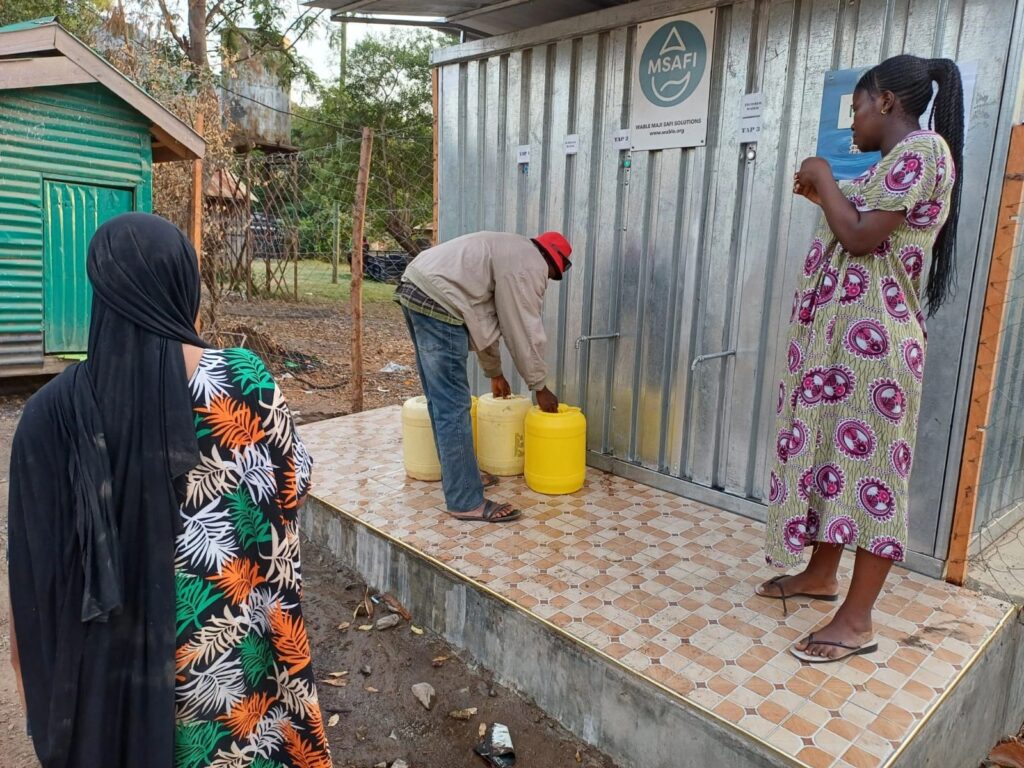
People using water system
Over three weeks of hands-on support, R2C helped Onyango to sharpen his approach and accelerate his growth. This helped him to deepen engagement with local communities and key stakeholders. The training also offered strategic insights into scaling, enabling Onyango to expand from a single kiosk to multiple locations, creating jobs for youth and women, and embedding sustainable water collection and storage practices. As a result, in just five months, sales grew 120%, repeat customers increased, and local government started supporting the kiosks, recognising their value as public infrastructure. In Paga, Kisumu County, rolling out one of the M-Safi Smart Water ATMs is contributing to reducing disease, cutting water loss, and saving time, especially for women and children. Project implementers report up to an 80% reduction in waterborne disease risk and a 40% reduction in non‑revenue water losses.
With solar power, M-Pesa integration, and community ownership, the kiosks are sustainable, efficient, and empowering. The impact goes beyond a single business. Community officials now see small-scale water hubs as complementary to larger water infrastructure and Wable Maji Safi Solutions is now a model for community-centred, sustainable water innovation across the region. “As a government, we are confident that this project represents a high-impact intervention in sanitation and disease control, climate change mitigation, financial inclusion, and the digital economy.” — Dr. John Agili, Homa Bay County Government. Wable Maji Safi Solutions is now a model for community-centred, sustainable water innovation across the region.
This content is produced in partnership with the Foreign, Commonwealth & Development Office (FCDO) and the RISA Fund.