From Research to Reform: How RISA Has Supported Autism Education in Tanzania
In Iringa, Research and Innovation Systems for Africa (RISA) Fund-supported research is transforming how children with autism are supported in elementary schools across Tanzania. This work has been led by Dr Miriam Laiser, a Mawazo Connects fellow, whose pioneering research on neurodivergent learners has been supported by RISA – a programme implemented by Chemonics UK and funded by the UK International Development.
In 2018, Dr Laiser founded Buyegi Trust Fund and Unique Child Academy, an inclusive school that offers early interventions for children with neurodivergence, with a specific focus upon autism. She has since trained over 1,500 teachers and parents on inclusive practices, and her recent doctoral research at the Open University of Tanzania has culminated in a model that is now influencing policy and practice across the country.
“Inclusive education for learners with autism is a new ideology in Tanzania,” Dr Laiser explains. “Many educators are not well prepared to handle it appropriately. My research aimed to change that.”

She conducted a three-year participatory action research project in an inclusive pre-primary school in Iringa. The study involved four cycles of planning, action, observation, and reflection, engaging teachers, parents, and experts in co-enquiry. The result was the Autism Inclusion Model (AIM) — a framework tailored to the Tanzanian context, grounded in the social model of disability and sociocultural theory.
The AIM framework promotes early diagnosis and intervention, sensory accommodations, differentiated curriculum, and strong parental involvement. It also advocates for clear and enabling policies to support inclusive education at scale.
“Once we adjust our environment and put in place appropriate accommodations, we enhance learning outcomes for learners with autism,” says Dr Laiser. “This is not just about education — it’s about equity, dignity, and inclusion.”
Empowering Inclusive Education for Children with Autism
Dr Laiser’s work directly supports the FCDO’s strategic priorities in education, gender equality, and disability inclusion. Her lifelong focus on early intervention, teacher capacity building, and community engagement reflects RISA’s commitment to strengthening research ecosystems that are locally led, evidence-based, and impact-driven.
The RISA Fund, which supports research and innovation systems across six African countries, aims to foster inclusive development by enabling researchers to address real-world challenges. Dr Laiser’s work exemplifies this mission — translating academic research into practical solutions that improve lives. For this reason, her work won the RISA-supported Mawazo Fellowship in 2023. The Mawazo Fellowship is an FCDO-funded cohort of early-career female researchers driving change across the continent.
“The support from RISA enabled me to present my findings to policymakers from 31 African countries,” Dr Laiser attested. “It was a milestone in my academic and professional journey.”
At the Evidence for Development Conference in Nairobi in May 2025, she shared insights from her research and participated in a panel on building robust research ecosystems for sustainable development — a core theme of RISA’s work.
Feedback on Dr Laiser’s research to support autistic learners was overwhelmingly positive. A policy advisor from Kenya remarked, “This research provides much-needed insights into inclusive education, and the recommendations are practical and impactful.” A school principal from Uganda reiterated that “Presentations like this help us understand global and regional perspectives, which are essential for adapting best practices at the school level.”
Watch Dr Laiser’s RISA-funded presentation to policymakers here:
Building Sustainable Systems and Scaling the Successes
Dr Laiser is now scaling her work to support autistic learners through partnerships with education ministries, autism advocacy groups, and media houses in Tanzania. She is also exploring funding opportunities with development agencies and private foundations to expand outreach and implement pilot projects in under-served regions.
“I believe that when women advance, the world succeeds,” she says. “I am working to see that happen in my society — through education, empowerment, and inclusion.”
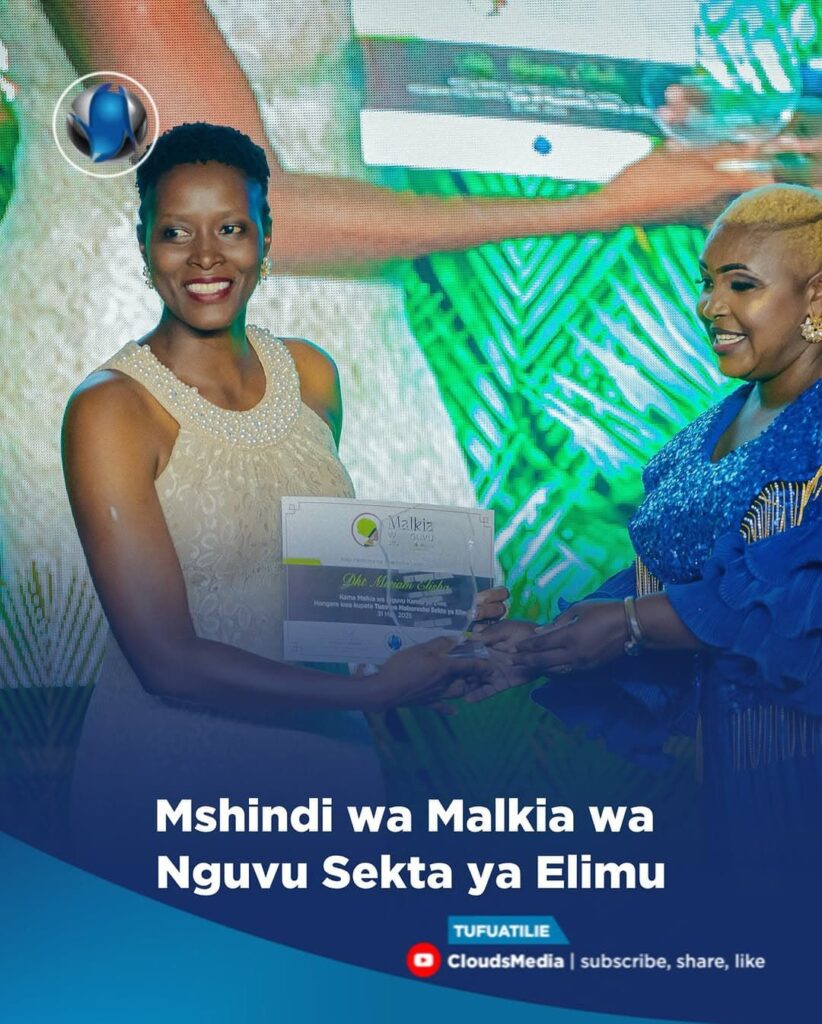
Her work to date has earned her multiple accolades, including the Malkia wa Nguvu Award (2025), Mwanamke Kinara Award (2022), and recognition as an Obama Leader-Africa (2024).
Pull quote: “Once we adjust our environment and put in place appropriate accommodations, we enhance learning outcomes for learners with autism. This is not just about education — it’s about equity, dignity, and inclusion.” – Dr Miriam Laiser
Looking Ahead
Dr Laiser’s vision is clear: a future where every child, regardless of ability, has access to quality education. With support from RISA, FCDO and other partners, her research and institutional reform is building the systems, tools, and networks needed to make that vision a reality: to give every child the chance to learn with dignity, in the way that works best for them.
This content is produced in partnership with the Foreign, Commonwealth & Development Office (FCDO) and the RISA Fund.